💪🏻 星期一小挑戰

I saw this post randomly on the “English Grammar” Reddit forum:
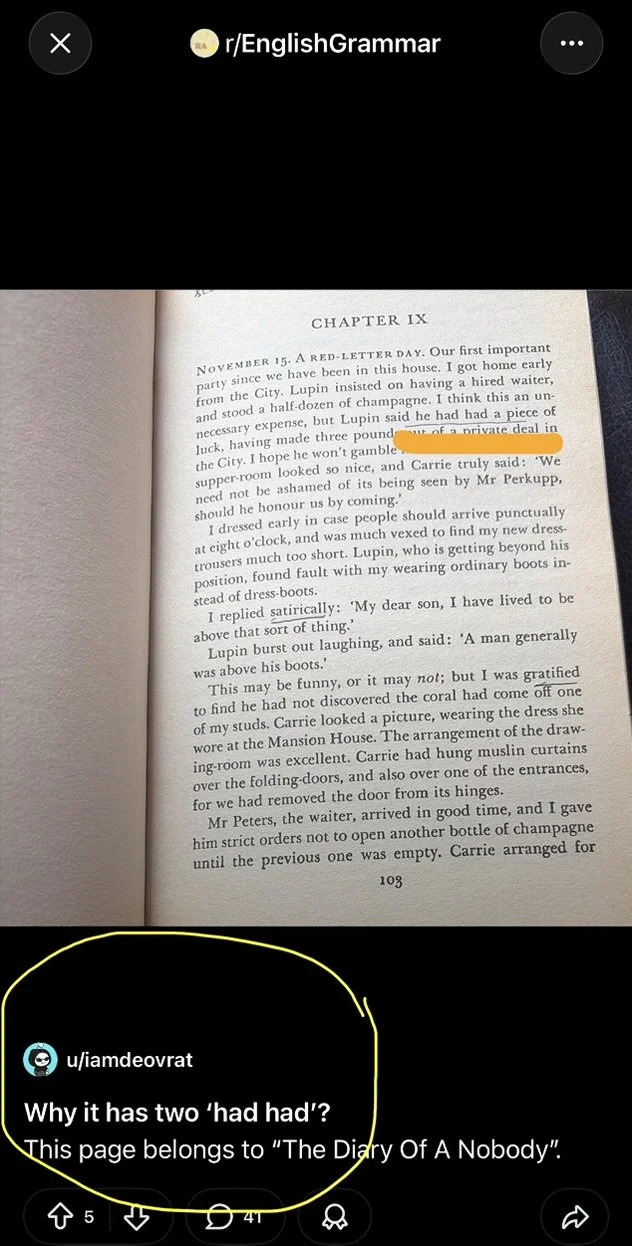
I thought that you can apply what you have learnt from “Core Concepts of English” to answer this question -- as well as fix the question itself, as it has structural problems.

If you can’t read the words in the image clearly, the poster asked this question about a sentence that he underlined on the book page:

“Why it has two ‘had had’?”*

(他想表達的意思是:為甚麼有兩個「had」?)

The underlined sentence on the page is this:

I think this is an unnecessary expense, but Lupin said he had had a piece of luck, having made three pounds out of a private deal in the City.

我覺得這是一筆不必要的開支,但 Lupin 說他剛好走運,在倫敦做了一宗私人交易,賺了三鎊。

So my challenge to you is:

  • Can you answer this question about why it is “had had” in the quoted sentence?

  • Can you then identify the structural issue with the question “why it has two ‘had had’”* and rewrite it correctly?

(Answers are below.)


我偶然在 Reddit 的「English Grammar」討論區看到這個 post。

我覺得大家可以嘗試用你在《Core Concepts of English》學過的內容去回答這個問題——同時,也可以修正這條問題本身,因為它在結構上也有問題。

如果你看不清楚圖片入面的字,發帖者問的是書頁上他劃線的句子,問題是:

“Why it has two ‘had had’?”*

(他想表達的意思是:為甚麼有兩個「had」?)

書頁上劃線的句子是:

I think this is an unnecessary expense, but Lupin said he had had a piece of luck, having made three pounds out of a private deal in the City.

我覺得這是一筆不必要的開支,但 Lupin 說他剛好走運,在倫敦做了一宗私人交易,賺了三鎊。

所以,我想給大家的挑戰是:

  • 你能不能對這個人解釋,為甚麼原句入面有「had had」這字形?

  • 然後,你能不能指出 “Why it has two ‘had had’?”* 這條問題在結構上有甚麼問題,並將它改寫成可行和正確的版本?

(答案在下方)


Answers 答案:

  1. “Had had” is the finite verb form in the embedded clause “(that) he had had a piece of luck, having made three pounds out of a private deal in the City.” It is in “past perfect” form. The main verb within this finite verb form is “have,” so, when it is in “past perfect,” there is first the auxiliary verb “had” (auxiliary “have” in past tense form), and then the past participle form of the main verb “have,” which happens to also have the identical form “had.”

    「Had had」是嵌入子句「(that) he had had a piece of luck, having made three pounds out of a private deal in the City」入面的限定動詞字形。它是「past perfect」字形——這個限定動詞字形入面的主要動詞是「have」,所以,當它變成「past perfect」字形時,前面首先有輔助動詞「had」(past tense 字形的「have」),然後再有主要動詞「have」的 past participle 字形,而這個字形剛好也是一模一樣的「had」,所以動詞「have」的「past perfect」限定動詞字形就是「had had」。

    Here, the “past perfect” form is appropriate in context because this embedded clause is stating something that happened "earlier” in time than the time established in the outer clause “Lupin said,” which has a finite verb in “simple past” form, “said.”

    在這裡,「past perfect」字形在語境中很適合,因為這個嵌入子句表達的是一件在外層子句「Lupin said」所建立的時間之前發生的事;而外層子句的限定動詞「said」是「simple past」字形的。

    As I explained further in the one of the lessons in my new “10 Practical Writing Tips” course, the point is not that the “past perfect” form is “mandatory” when the meaning is such — it is rather that, if the writer wishes to highlight the sequential relationship between the action of “Lupin said” and the prior action of “he had had a bit of luck,” then the “past perfect” form would be very appropriate.

    正如我在新課程《10 Practical Writing Tips》其中一課入面進一步解釋過,並不是說在表達這種意思時,是「必定要」「past perfect」字形的;而是,如果寫句子的人想突出「Lupin said」這個動作和較早發生的「he had had a bit of luck」這個動作之間的先後時間關係,那麼「past perfect」字形就會非常適合。

    There is no mystery at all to “had had” if this person only approached English grammar systematically!

    其實,如果這個人只是學會有系統地理解英文文法,「had had」根本沒有任何神秘之處!

  2. The question “Why it has…”* is wrong because it is an independent question clause, but the writer did not move the auxiliary verb of the finite verb in front of the subject as independent question clauses require in terms of word order. The writer wrongly kept the clause “it has” — with the subject “it” followed by the single-word finite verb “has,” like in an indicative clause.

    問題「Why it has…*」是錯的,因為它是一個獨立問句子句,但寫的人沒有按照獨立問句子句在詞序上的規範,將限定動詞入面的輔助動詞移到主語前面。寫的人錯誤地保留了「it has」這個子句——即是主語「it」後面接著單字限定動詞「has」,就像普通陳述子句入面的詞序一樣。

    When the finite verb of an independent question clause has no existing auxiliary verb, like in this example, we have to first add the extra auxiliary verb “do” in the right form — “does” in this case — and then change the main verb “has” back to its infinitive form — “have” in this case. Then, we have to move the auxiliary verb “does” to the front, leaving us with:

    當獨立問句子句的限定動詞本身沒有輔助動詞的時候,就像這個例子一樣,我們要先加上額外的輔助動詞「do」的適當字形——在這裡就是「does」——然後將主要動詞「has」變回它的基本動詞字形——在這裡就是「have」。然後,我們要將額外加的輔助動詞「does」移到主語前面,得出:

    Why does it have…..?

    Why does it have two “had”s?
(🎥 短片)「Fallible」對廣東話母語人士的自然發音陷阱 🚨

這星期較早時候,我們看了另一篇 New York Times「Word of the Day」文章入面的單字「fallible」。如果你錯過了,可以在這裡重溫。

我們當時看了幾個可以和這個單字建立的字源連繫,幫助我們更有效地學習和記住它。我們也看了它的反義詞「infallible」,以及「Papal Infallibility」這個固定用語——也就是「教宗無誤」這個天主教教義。

這裡,我們就將對這個單字的討論再延伸一點,看一下廣東話母語人士在發這個字的時候,自然會遇到的一些發音陷阱(因為不少同學反映,上次關於「perceptive」這個字的發音討論很有幫助。)

同樣,大家發「fallible」時的自然發音陷阱主要涉及重音/非重音音節的區分——這對廣東話母語人士來說是一個自然困難,因為廣東話音節之間沒有重音分別,只有聲調和高低音分別——以及由此自然產生的輕母音/ə/ 發音錯誤。

「Fallible /fæləbəl/」這字第一個音節裡面也有英文母音 /æ/,這個音在廣東話語音系統入面並不是一個被分辨出來的音素(phoneme),所以也是另一個廣東話母語人士自然較難區分出的母音。

⚖️ "To be fair...":把固定表達方式放進文法結構框架中學習

I happened to hear and read the expression “to be fair” multiple times in a single afternoon recently, so that inspired me to write a short email today about it.

Remember that, even though fixed expressions are fixed phrases with specific meanings that have to be learned and used as they are, they are still structurally and functionally parts of sentences, and, as such, we have to understand their structural and functional roles systematically in order to express meaning with them accurately.

The expression “to be fair” expresses the meaning of “if I am being fair (about the situation that I am talking about or going to talk about)” -- it is an expression that helps to make a statement more balanced or less one-sided.

Usually, we add it to what we are saying/writing after making a negative or critical comment about the topic or situation to acknowledge that there is objectively another side to it, and that it would be “unfair” to see the situation as all bad.

A simple example:

The restaurant was really expensive, but, to be fair, the food was excellent.

這間餐廳真的很貴,但公平一點講,食物真的非常好。

In this context, the speaker first makes the negative comment that “the restaurant was really expensive” -- by then adding “to be fair” in the next part of the sentence, he/she “balances out” the comment a bit by acknowledging that the food was actually very good, so there is a “reason” for it to be “expensive,” even though the main comment is a negative one about the price.

“To be fair” is an expression that allows us to “signal” that we are trying to give a “fairer” or more “balanced” view of a situation even though our main comment is negative or critical.

In a conversation, it can also be that one person says something negative about a situation, and the other person introduces something more “balanced” or contrary to that negative opinion with “to be fair.” For example:

A: The restaurant was so expensive.

B: To be fair, though, the food was excellent.

The meaning expressed by “to be fair” is the same -- it allows us to introduce a more “balanced” view to a negative comment, even when it is one from another person.

So, what is the structural and functional role of the expression “to be fair” in a sentence?

If you have taken our foundational course, you would know that it is a type of modifier phrase called an infinitive phrase -- a phrase that starts with an infinitive form of a verb (like “be” here) marked by the marker “to” and plays the role of a modifier (adverb or adjective) in a sentence.

For example:

To be fair, the food was excellent.

In this one-clause sentence, the infinitive phrase “to be fair” is playing the role of an adverb phrase modifying the core action of the entire clause, that is, “the food was excellent” -- adding a “balancing” qualification to the entire action of this clause.

As an adverb phrase modifying the whole clause, “to be fair” would originally be at the end of the clause. However, as you know from “Core Concepts of English” and elsewhere in my teaching, adverb phrases modifying the whole clause also have the flexibility to move forward to other positions in the clause -- most often to the “topicalized” position at the front.

Because “to be fair” “qualifies” a criticism, it is more often than not “topicalized” to the front of the clause it is modifying -- so that the speaker can “signal” to the listener right from the start that he/she is about to say something more balanced to soften the negative comment.

Recall that infinitive phrases as modifiers (unless they are required by specific verbs) express the meaning of “intended actions” or “actions not yet done,” so, if you apply this understanding to “to be fair,” you can see why it means “if we are going to be fair/if we want to be fair.”

One interesting thing to note is that the “doer” of the action in an infinitive phrase modifier is usually the subject of the entire clause (although it can also be the object or a noun specifically added within the infinitive phrase as well).

For example:

I went to the conference to learn more. /

To learn more, I went to the conference.

(我)為了學更多東西,我參加了那個研討會。

In this clause, the “doer” of the action in the infinitive phrase “to learn more” is implied to be the subject of the entire clause, “I,” also.

However:

To be fair, the food was excellent.

公平一點講,食物真的非常好。

Because “to be fair” is a fixed expression with its fixed meaning of “balancing” a negative comment, it is understood that the implied “doer” of the action in “to be fair” is the speaker rather than the subject or other elements in the clause it is modifying -- here, clearly, the “person being fair” is the speaker.

Once you understand both the structural role and specific meaning of a fixed expression, you can start to use it to express meaning accurately in your own sentences -- but this is just the first step. Going a step further, you can start to contextualize these fixed expressions even more to suit your specific tone, emphasis, and meaning more precisely in a specific context.

This is especially an important skill if you want to bring your writing to the next level.

For example:

We paid an almost unreasonable amount of money for this meal, but, to be fair to the restaurant, the food and service were both excellent.

我們這一餐付了幾乎不合理地多的錢,但公平一點評價這間餐廳的話,食物和服務都非常好。

Here, we have aptly added an additional prepositional phrase “to the restaurant” in the fixed expression “to be fair” to contextualize the comment about the restaurant’s price, food, and service even more.

In the new course “10 Practical Writing Tips,” we go further into this kind of writing choice: how to take the structural understanding from “Core Concepts of English” and apply it to actual writing so that you can choose, adjust, and contextualize English expressions more accurately in your own sentences.

You can learn more about “10 Practical Writing Tips” at the link below.

我最近在同一個下午,多次聽到和讀到「to be fair」這個 expression,所以今天就想寫一封短 email 跟大家講一下它。

記得,即使 fixed expressions 是有固定意思、需要整個學習和記的,但它們在結構和功能上仍然是句子文法的一部分。因此,我們仍然需要有系統地理解它們在結構和功能上的角色,才能準確地以它們去表達意思。

「To be fair」這個表達方式所表達的意思大概是「如果我對我正在講/即將講的情況作出公平判斷的話」——它會幫助我們令一個陳述聽起來更加平衡、沒有那麼片面。

通常,我們會在對眼前的話題或情況作出負面或批判性的評論之後加入這個表達,去承認客觀上這件事也有另一面,而如果將整個情況看成完全負面的話,其實是「不公平」的。

一個簡單例子:

The restaurant was really expensive, but, to be fair, the food was excellent.

這間餐廳真的很貴,但公平一點講,食物真的非常好。

在這個語境中,說話者首先作出「the restaurant was really expensive」這個負面評論——然後在句子的下一部分(「but」連接的子句)加入「to be fair」,就稍微「平衡」了這個評論,承認食物其實非常好,所以即使主要評論是關於價錢貴評論,這間餐廳「貴」也有某個合理理由。

「To be fair」是一個讓我們表示自己正在嘗試對某個情況作出更加「公平」或者更加「平衡」的描述的 expression,即使我們的主要評論是負面或者批判性的。

在對話中,也可以是一個人先對某個情況作出負面評論,而另一個人再用「to be fair」引入一個比較「平衡」或者跟這個負面意見相反的點。例如:

A: The restaurant was so expensive.

B: To be fair, the food was excellent.

「To be fair」所表達的意思是一樣的——它讓我們在一個負面評論之後,引入一個比較「平衡」的看法,即使這個負面評論是來自另一個人的。

那麼,「to be fair」這個表達在句子入面的結構和功能角色是甚麼呢?

如果你上過我們的基礎課程,你會知道它是一種叫做基本動詞組(infinitive phrase)的修飾語詞組——也就是一個由被標記字「to」標示的基本動詞字形開始的詞組(好像這裡的「be」),並且在句子入扮演當修飾語(副詞或形容詞)的角色。

例如:

To be fair, the food was excellent.

在這個單子句句子入面,基本動詞組「to be fair」擔當的是額外副詞組的角色,修飾整個子句的核心動作,也就是「the food was excellent」——令這個核心動作被理解成一個用來「平衡」前面負面評論的補充說法。

作為一個修飾整個子句的副詞組,「to be fair」原本位置會在子句的末端。不過,正如在《Core Concepts of English》課程以及我其他教學入面解釋過,修飾整個子句的副詞組位置上有彈性,可以移前到那子句入面的其他位置——最常見就是移動到子句最前面的「topicalized」位置。

因為「to be fair」表達的是為一個批評加上說話者為了平衡補充的意思,所以它多數會被「topicalized」到它所修飾的子句最前面——這樣,說話者就可以一開始就向聽者表示,自己接下來要講的是一個比較平衡的說法,並且稍微減輕前面負面評論的力度。

另外,大家回想一下,基本動詞組作為修飾語的時候(除非它們在結構上是要完成某特定動詞的),表達的是「要去/會去做……」的意思。所以,如果你將這個理解套用到「to be fair」身上,就可以看到為甚麼它的意思是對負面陳述加入一層「如果我們要公平的話/如果我們想公平一點的話」的修飾意思。

有一點有趣的地方值得留意,就是基本動詞組修飾語入面那個動作的「實行者」,通常是整個子句的主語(雖然它也可以是賓語,或者是一個在基本動詞組入面特別加入的名詞)。

例如:

I went to the conference to learn more. /

To learn more, I went to the conference.

(我)為了學更多東西,我參加了那個研討會。

在這個子句入面,基本動詞組「to learn more」入面那個動作的「實行者」,被理解成也是整個子句的主語「I」。

不過:

To be fair, the food was excellent.

公平一點講,食物真的非常好。

因為「to be fair」是一個有固定意思、表示「平衡」負面評論的固定表達方式,所以「to be fair」入面那個動作的隱含「實行者」,被理解成是說話者,而不是它所修飾的子句入面的主語或者其他元素——在這裡,明顯地,「作出公平判斷」的人是說話者。

當你理解了一個 fixed expression 的結構角色和具體意思之後,你就可以開始在自己的句子入面,準確地以它表達意思——但這只是第一步。再進一步,你可以開始將這些 fixed expressions 更加具體地放進語境入面,令它們更準確地配合你在特定語境入面想要表達的語氣、重點和意思。

如果你想將自己的寫作帶到下一個層次,這是一個尤其重要的能力。

例如:

We paid an almost unreasonable amount of money for this meal, but, to be fair to the restaurant, the food and service were both excellent.

我們這一餐付了幾乎不合理地多的錢,但公平一點評價這間餐廳的話,食物和服務都非常好。

在這裡,我們在 fixed expression「to be fair」入面,很恰當地加上了額外的介詞組「to the restaurant」,將這個關於餐廳價錢、食物和服務的評論更加具體地放進語境入面。

在《10 Practical Writing Tips》新課程入面,我們會再進一步講這類寫作選擇:不只是知道一個 expression 的基本意思和句子功能,而是學會怎樣在具體語境中選擇和調整表達方式,令英文寫得更加準確、自然、有層次。

想在《Core Concepts of English》的基礎上進一步提升英文寫作,可以到連結了解更多。

⚖️ "To be fair...":把固定表達方式放進文法結構框架中學習

I happened to hear and read the expression “to be fair” multiple times in a single afternoon recently, so that inspired me to write a short email today about it.

Remember that, even though fixed expressions are fixed phrases with specific meanings that have to be learned and used as they are, they are still structurally and functionally parts of sentences, and, as such, we have to understand their structural and functional roles systematically in order to express meaning with them accurately.

The expression “to be fair” expresses the meaning of “if I am being fair (about the situation that I am talking about or going to talk about)” -- it is an expression that helps to make a statement more balanced or less one-sided.

Usually, we add it to what we are saying/writing after making a negative or critical comment about the topic or situation to acknowledge that there is objectively another side to it, and that it would be “unfair” to see the situation as all bad.

A simple example:

The restaurant was really expensive, but, to be fair, the food was excellent.

這間餐廳真的很貴,但公平一點講,食物真的非常好。

In this context, the speaker first makes the negative comment that “the restaurant was really expensive” -- by then adding “to be fair” in the next part of the sentence, he/she “balances out” the comment a bit by acknowledging that the food was actually very good, so there is a “reason” for it to be “expensive,” even though the main comment is a negative one about the price.

“To be fair” is an expression that allows us to “signal” that we are trying to give a “fairer” or more “balanced” view of a situation even though our main comment is negative or critical.

In a conversation, it can also be that one person says something negative about a situation, and the other person introduces something more “balanced” or contrary to that negative opinion with “to be fair.” For example:

A: The restaurant was so expensive.

B: To be fair, though, the food was excellent.

The meaning expressed by “to be fair” is the same -- it allows us to introduce a more “balanced” view to a negative comment, even when it is one from another person.

So, what is the structural and functional role of the expression “to be fair” in a sentence?

If you have taken our foundational course, you would know that it is a type of modifier phrase called an infinitive phrase -- a phrase that starts with an infinitive form of a verb (like “be” here) marked by the marker “to” and plays the role of a modifier (adverb or adjective) in a sentence.

For example:

To be fair, the food was excellent.

In this one-clause sentence, the infinitive phrase “to be fair” is playing the role of an adverb phrase modifying the core action of the entire clause, that is, “the food was excellent” -- adding a “balancing” qualification to the entire action of this clause.

As an adverb phrase modifying the whole clause, “to be fair” would originally be at the end of the clause. However, as you know from “Core Concepts of English” and elsewhere in my teaching, adverb phrases modifying the whole clause also have the flexibility to move forward to other positions in the clause -- most often to the “topicalized” position at the front.

Because “to be fair” “qualifies” a criticism, it is more often than not “topicalized” to the front of the clause it is modifying -- so that the speaker can “signal” to the listener right from the start that he/she is about to say something more balanced to soften the negative comment.

Recall that infinitive phrases as modifiers (unless they are required by specific verbs) express the meaning of “intended actions” or “actions not yet done,” so, if you apply this understanding to “to be fair,” you can see why it means “if we are going to be fair/if we want to be fair.”

One interesting thing to note is that the “doer” of the action in an infinitive phrase modifier is usually the subject of the entire clause (although it can also be the object or a noun specifically added within the infinitive phrase as well).

For example:

I went to the conference to learn more. /

To learn more, I went to the conference.

(我)為了學更多東西,我參加了那個研討會。

In this clause, the “doer” of the action in the infinitive phrase “to learn more” is implied to be the subject of the entire clause, “I,” also.

However:

To be fair, the food was excellent.

公平一點講,食物真的非常好。

Because “to be fair” is a fixed expression with its fixed meaning of “balancing” a negative comment, it is understood that the implied “doer” of the action in “to be fair” is the speaker rather than the subject or other elements in the clause it is modifying -- here, clearly, the “person being fair” is the speaker.

我最近在同一個下午,多次聽到和讀到「to be fair」這個 expression,所以今天就想寫一封短 email 跟大家講一下它。

記得,即使 fixed expressions 是有固定意思、需要整個學習和記的,但它們在結構和功能上仍然是句子文法的一部分。因此,我們仍然需要有系統地理解它們在結構和功能上的角色,才能準確地以它們去表達意思。

「To be fair」這個表達方式所表達的意思大概是「如果我對我正在講/即將講的情況作出公平判斷的話」——它會幫助我們令一個陳述聽起來更加平衡、沒有那麼片面。

通常,我們會在對眼前的話題或情況作出負面或批判性的評論之後加入這個表達,去承認客觀上這件事也有另一面,而如果將整個情況看成完全負面的話,其實是「不公平」的。

一個簡單例子:

The restaurant was really expensive, but, to be fair, the food was excellent.

這間餐廳真的很貴,但公平一點講,食物真的非常好。

在這個語境中,說話者首先作出「the restaurant was really expensive」這個負面評論——然後在句子的下一部分(「but」連接的子句)加入「to be fair」,就稍微「平衡」了這個評論,承認食物其實非常好,所以即使主要評論是關於價錢貴評論,這間餐廳「貴」也有某個合理理由。

「To be fair」是一個讓我們表示自己正在嘗試對某個情況作出更加「公平」或者更加「平衡」的描述的 expression,即使我們的主要評論是負面或者批判性的。

在對話中,也可以是一個人先對某個情況作出負面評論,而另一個人再用「to be fair」引入一個比較「平衡」或者跟這個負面意見相反的點。例如:

A: The restaurant was so expensive.

B: To be fair, the food was excellent.

「To be fair」所表達的意思是一樣的——它讓我們在一個負面評論之後,引入一個比較「平衡」的看法,即使這個負面評論是來自另一個人的。

那麼,「to be fair」這個表達在句子入面的結構和功能角色是甚麼呢?

如果你上過我們的基礎課程,你會知道它是一種叫做基本動詞組(infinitive phrase)的修飾語詞組——也就是一個由被標記字「to」標示的基本動詞字形開始的詞組(好像這裡的「be」),並且在句子入扮演當修飾語(副詞或形容詞)的角色。

例如:

To be fair, the food was excellent.

在這個單子句句子入面,基本動詞組「to be fair」擔當的是額外副詞組的角色,修飾整個子句的核心動作,也就是「the food was excellent」——令這個核心動作被理解成一個用來「平衡」前面負面評論的補充說法。

作為一個修飾整個子句的副詞組,「to be fair」原本位置會在子句的末端。不過,正如在《Core Concepts of English》課程以及我其他教學入面解釋過,修飾整個子句的副詞組位置上有彈性,可以移前到那子句入面的其他位置——最常見就是移動到子句最前面的「topicalized」位置。

因為「to be fair」表達的是為一個批評加上說話者為了平衡補充的意思,所以它多數會被「topicalized」到它所修飾的子句最前面——這樣,說話者就可以一開始就向聽者表示,自己接下來要講的是一個比較平衡的說法,並且稍微減輕前面負面評論的力度。

另外,大家回想一下,基本動詞組作為修飾語的時候(除非它們在結構上是要完成某特定動詞的),表達的是「要去/會去做……」的意思。所以,如果你將這個理解套用到「to be fair」身上,就可以看到為甚麼它的意思是對負面陳述加入一層「如果我們要公平的話/如果我們想公平一點的話」的修飾意思。

有一點有趣的地方值得留意,就是基本動詞組修飾語入面那個動作的「實行者」,通常是整個子句的主語(雖然它也可以是賓語,或者是一個在基本動詞組入面特別加入的名詞)。

例如:

I went to the conference to learn more. /

To learn more, I went to the conference.

(我)為了學更多東西,我參加了那個研討會。

在這個子句入面,基本動詞組「to learn more」入面那個動作的「實行者」,被理解成也是整個子句的主語「I」。

不過:

To be fair, the food was excellent.

公平一點講,食物真的非常好。

因為「to be fair」是一個有固定意思、表示「平衡」負面評論的固定表達方式,所以「to be fair」入面那個動作的隱含「實行者」,被理解成是說話者,而不是它所修飾的子句入面的主語或者其他元素——在這裡,明顯地,「作出公平判斷」的人是說話者。

🔎 所有英文句子分析的原點:clause 子句

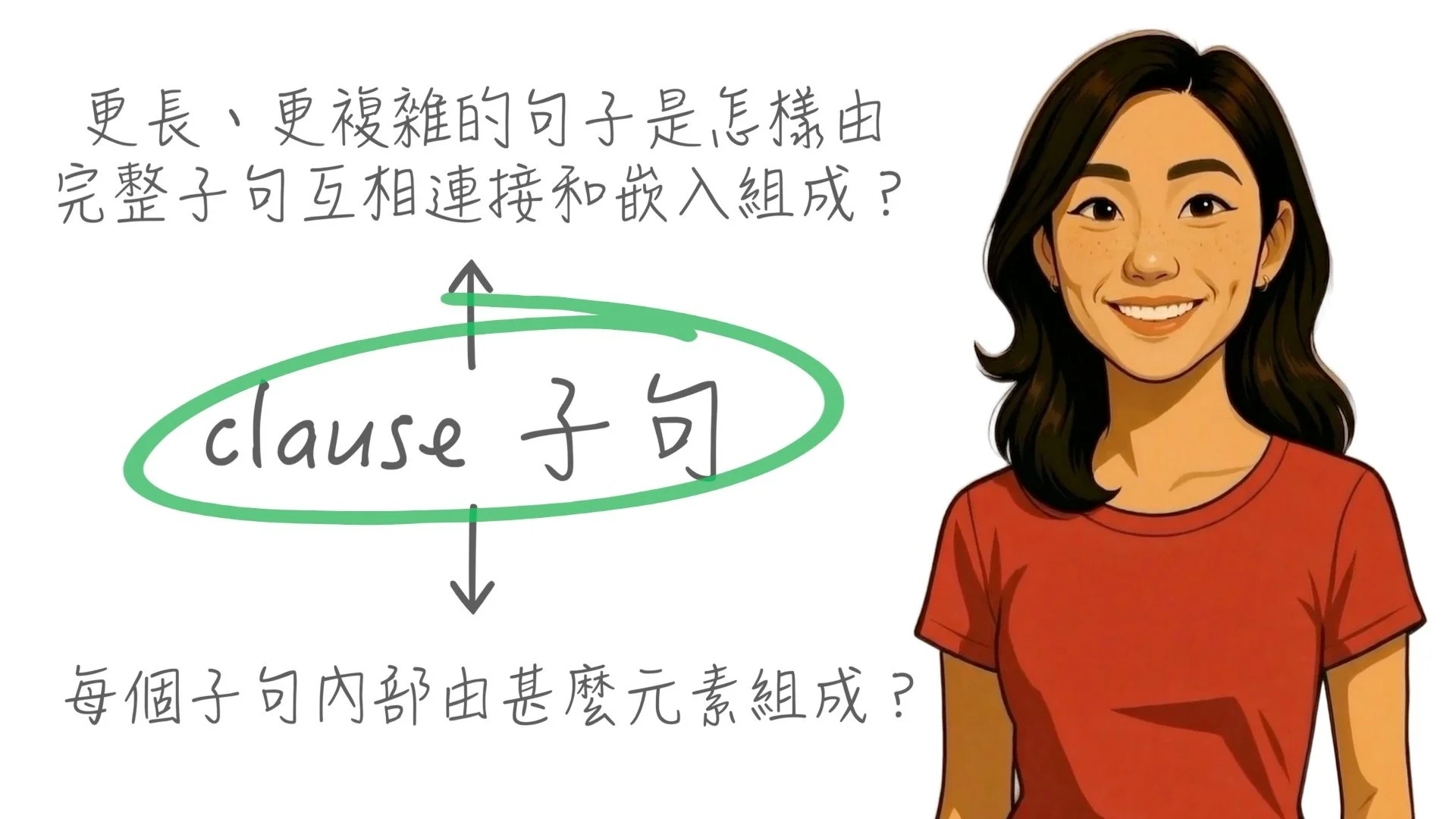
今日用短片和大家看看「clause 子句」這個結構單元為甚麼在理解英文整體文法時那麼重要。

在我教大家的英文文法框架裡,clause 子句是分析英文句子的原點。

因為不論一個句子有多長、多複雜,它最終都是由一個或多個完整子句,以不同方式連接、嵌入、組合而成。

所以,如果你能夠先看清楚一句句子裡有多少個子句,每個子句的主語和限定動詞在哪裡,很多原本看起來很複雜的句子,都會變得有系統,不再神秘。我們一起看看:

我在基礎課程《Core Concepts of English》裡會帶大家建立完整的英文文法框架:不是把文法當成一堆零散規則去背,而是有系統地理解英文句子怎樣組成、怎樣運作、怎樣表達意思。

如果你希望由最基礎開始,建立這套分析英文句子的框架,可以到下面的課程介紹頁面了解更多。

課程推出至今已經 8 年,一直是我整個英文教學框架的核心課程,也累積已有超過 6700 位學生參加。現有價格預計只會維持到今年夏天,之後正式價格將會重新調整。☺️

日常小測驗:找出主語和限定動詞

Have you been putting the grammatical framework you built from Core Concepts of English to good use in your own learning?

Let’s try something fun today. ☺️ Can you find all the finite verbs and their corresponding subjects in the sentences below?

If you want to go one step further, can you point out where the clauses are?


你有沒有把《Core Concepts of English》裡建立的文法框架,應用到自己的英文學習之中?

今日不如試一個小小的練習。☺️

你可不可以在以下句子中,找出所有限定動詞,以及每個限定動詞對應的主語?

如果想再進一步,也可以試試指出每一個子句在哪裡。


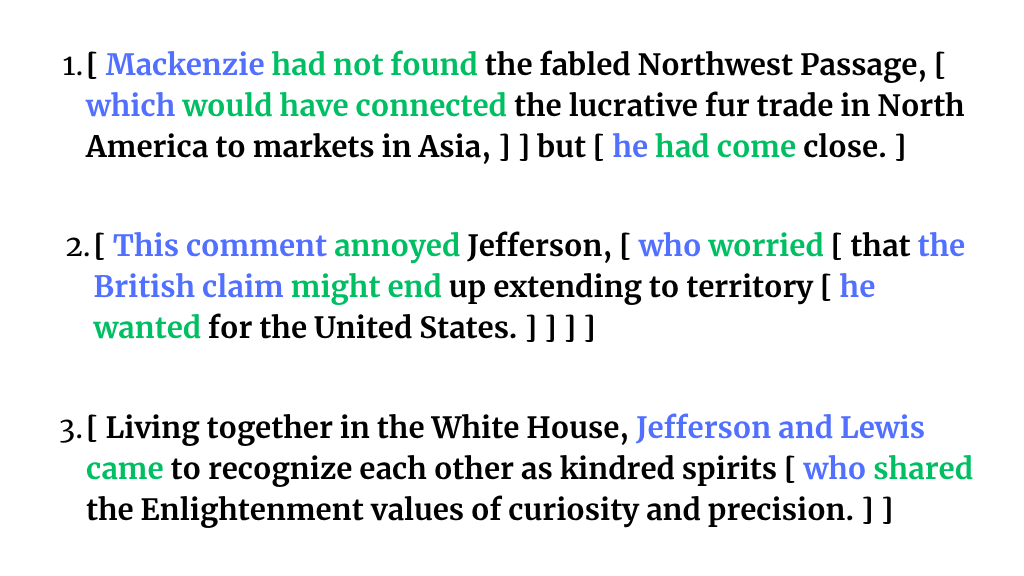
  1. Mackenzie had not found the fabled Northwest Passage, which would have connected the lucrative fur trade in North America to markets in Asia, but he had come close.

  2. This comment annoyed Jefferson, who worried that the British claim might end up extending to territory he wanted for the United States.

  3. Living together in the White House, Jefferson and Lewis came to recognize each other as kindred spirits who shared the Enlightenment values of curiosity and precision.

(以上練習句子取材及改寫自 The New Yorker 一篇書評文章,並略作調整以配合這次文法分析練習。)


Answers:

每日一字:Perceptive |從字源、字形到英文發音陷阱

今天試試用短片形式說說之前介紹過的 New York Times 每日一字!🎥

今次的字是「perceptive」,我們會由字義、字源、字形,講到廣東話母語人士容易遇到的幾個發音陷阱。☺️

例句來源:Alissa Wilkinson, “The Love That Remains’ Review: Time Goes On,” The New York Times, January 29, 2026;此例句亦見於 The New York Times Learning Network “Word of the Day: Perceptive,” May 22, 2026。

學外語時,要知道甚麼不值得糾結 🧐

Another important reason why we need to have an overall understanding of English (whether of its grammar, vocabulary, or pronunciation) is that it allows you to discern what is important and what is not important in your learning in the “grand scheme of things,” so to speak.

I was reading the book “Heiresses” by the British historian Miranda Kaufmann yesterday and saw this line about the epitaph on the tombstone of an 18th-19th century British enslaver in Jamaica:

One can just about make out the inscription praising “the honorable” Simon Taylor as “a loyal subject, a firm friend, and an honest man” who had led “an active life, during which he faithfully and ably filled the highest offices of civil and military duty in this island.”

勉強可以辨認出碑文內容:它讚揚「尊貴的」Simon Taylor,稱他是「忠誠的臣民、堅定的朋友、誠實的人」,一生積極有為,「在此島忠誠而能幹地擔任了文職和軍事職責中最高的職位」。

The prepositional phrase at the end, “in this island,” drew my attention a bit -- because it sounds a little less natural to me than what we would usually say now, which is “on this island,” with the preposition “on.”

However, this just reflects that native speakers’ choice of prepositions when forming prepositional phrases with certain noun phrases has slightly shifted since the 18th/19th centuries. This does not mean that the person writing the epitaph then was “wrong,” or that we are “wrong” now for preferring to say “on the island” instead.

When we have an overall understanding of how the language works and of how language changes, we can make a mental note of this being interesting and then move on -- because this is not an important point to dwell on and be confused about.

There is no need to ask the question, “why did this British person write ‘in this island’? Isn’t this ‘wrong’? Shouldn’t it be ‘on this island’?”

This inspired me to write this short email just to say that, very often, I see students -- especially those that do not yet have an overall view of how English works -- getting bogged down by things like “whether it should be ‘on the bus’ or ‘in the bus’,” or whether it should be “the birds on the apple tree” or “in the apple tree.”

For lack of a better way of putting this -- such questions are unimportant in most contexts. Having an overarching systematic understanding of English allows you to discern questions that are actually important to your learning from those that are not.

For example, as far as prepositional phrases are concerned, it is far more important to understand what they are structurally, what functions they can serve in sentences, and the fact that are general relational meanings expressed by each preposition but also many fixed expressions that have fixed meanings -- than to get bogged down by a question like whether we should say “on this island” or “in this island.” (For the record, “on this island” sounds more natural now.)

Anyway, this was a just a random musing as I read this line. As always, I hope more and more students can step back and understand language from a more systematic perspective and learn to discern for themselves what is and is not (as) important in their learning journey.


我們需要對英文有整體理解(無論是對文法、詞彙,還是發音)的另一個重要原因是:這種整體理解可以幫助你在學習過程中自行判斷,甚麼是重要、甚麼不重要。

我昨天在讀英國學者 Miranda Kaufmann 的書《Heiresses》,看到這一句,講的是一位 18 至 19 世紀在牙買加的英國人奴隸主墓碑上的碑文:

One can just about make out the inscription praising “the honorable” Simon Taylor as “a loyal subject, a firm friend, and an honest man” who had led “an active life, during which he faithfully and ably filled the highest offices of civil and military duty in this island.”

勉強可以辨認出碑文內容:它讚揚「尊貴的」Simon Taylor,稱他是「忠誠的臣民、堅定的朋友、誠實的人」,一生積極有為,「在此島忠誠而能幹地擔任了文職和軍事職責中最高的職位」。

句尾的介詞組 「in this island」 稍為引起了我的注意,因為對我來說,它聽起來比我們今日通常會說的 「on this island」 稍為沒有那麼自然;今日我們通常會選介詞 「on」。

不過,這只反映了自 18 至 19 世紀以來,母語人士在將某些名詞組組成介詞組時,對介詞的選擇有了輕微變化。這不代表當時寫碑文的人「錯」了,也不代表我們今日較傾向說 「on the island」 就是「錯」的。

當我們對語言怎樣運作,以及語言怎樣變化,有一個整體理解時,我們可以在心裡留意一下這個現象很有趣,然後就繼續往前走——因為這不是一個值得花很多時間糾結和困惑的重點。

我們不需要問:「為甚麼這個英國人會寫 『in this island』?這不是『錯』嗎?不是應該寫 『on this island』 嗎?」

我讀到這一句時,就想到可以寫這封短 email 講一講:很多時候,我看到學生——尤其是還未對英文怎樣運作有一個整體視角的學生——很容易被一些問題卡住,例如究竟應該說 「on the bus」 還是 「in the bus」,又或者應該說 「the birds on the apple tree」 還是 「in the apple tree」等等。(我收過很多類似的問題 😅)

容許我直接一點說的話:在大部分語境裡,這類問題其實並不重要,一點都不值得去糾結。對英文有一個更高層次、更有系統的整體理解,會幫助你判斷哪些問題對你的學習真的重要,哪些問題其實沒有那麼重要。

例如,以介詞組來說,更重要的是理解它們在結構上是甚麼、它們在句子裡可以有甚麼功能,以及每一個介詞本身雖然會表達一些大概的跟名詞的關係意思,但同時也有很多固定表達方式有其固定意思。這些都比糾結於究竟應該說 「on this island」 還是 「in this island」 重要得多。(順帶一提,今日 「on this island」 聽起來較自然。)

總之,這只是我讀到這一句時的一點隨想。和一直以來一樣,我希望越來越多學生能夠退後一步,從一個更有系統的角度理解語言,並學會為自己判斷,在自己的學習旅程中,甚麼重要、甚麼沒有那麼重要,那麼就可以把時間和精神都只放在有意義的學習上。

📚 International Booker Prize winner: "Travel Travelogue" 《台灣漫遊錄》by Yang Shuang-zi

Today, I just want to share a book recommendation!

The novel “Taiwan Travelogue” written by Taiwanese novelist Yang Shuang-zi just won the International Booker Prize -- a prestigious literary award given to a work of fiction translated into English published in the U.K.

(Here is an article in the New York Times about this.)

I read the original Chinese version of this novel last year after it had already won the top translated fiction prize in the U.S. (the National Book Award for Translated Literature) and it was, by far, my favorite book that read in the whole of last year (and I read over 50!).

“Taiwan Travelogue” is set in 1938, during the period of Japanese colonial rule in Taiwan, and follows a female Japanese novelist travelling around Taiwan with a female Taiwanese interpreter. It is framed as a “rediscovered travelogue”: within the fiction of the book, the text was originally written in Japanese, then later “translated” into Chinese.

This means that even the original Chinese version is already a literary experiment in translation — a Chinese novel “pretending” to be a Chinese translation of a Japanese text. This metafictional structure makes the book especially fascinating as an exploration of language, authorship, and translation, and the real-life translations of the novel into other languages, including translator Lin King’s English translation, add yet another interesting layer to the whole project that makes readers ponder the power imbalances between languages and the role translation plays both in addressing and exacerbating those imbalances.

However, the novel is not just clever as a literary experiment. Through the intimate relationship between its two main characters — a Japanese woman and a Taiwanese woman — it explores colonial power, cultural hierarchy, desire, dependency, and the uneasy closeness between colonizer and colonized.

The author left a lot of room for readers to draw their own conclusions on these heavy themes, but, underneath it all, the book is also just simply just a devastatingly beautiful story of forbidden love.

As such, it is almost too fitting for this book to win the top prizes for translated fiction into English. I have not read the English version yet, but I am definitely interested in doing so if only to see what new layer of meaning the “real-life translation” adds to the novel’s formal and thematic explorations.

Yes, unusually, I am recommending a Chinese book to you for a change -- but one whose English translation recently won all the top translated literature prizes in English.

As such, if you are interested in reading “Taiwan Travelogue,” the original Chinese version would let you experience its internal game of “translation” directly, while the English version adds another real-life layer of translation on top of it. Either way, this is a book that will reward careful reading.


今天想跟大家分享一本書!

台灣小說家楊雙子的小說《臺灣漫遊錄》剛剛獲得了 International Booker Prize(國際布克獎)——這是一個很有份量的文學獎項,頒發給在英國出版、由其他語言翻譯成英文的小說作品。

(這裡有一篇 New York Times 關於這件事的文章。)

我去年讀了這本小說的中文原版;當時它已經獲得了美國最重要的翻譯文學獎項 National Book Award for Translated Literature(美國國家圖書獎翻譯文學獎)。而它是我去年讀過的所有書裡面,最喜歡的一本——而我去年讀了超過 50 本書!

《臺灣漫遊錄》的故事設定在 1938 年,即台灣日治時期。小說講述一位日本女作家,和一位台灣女通譯一起在台灣各地旅行。它的形式是一部「被人重新發現的『遊記』」:在小說的虛構設定裡,這部文本原本是用日文寫成,後來再被「翻譯」成中文。

也就是說,即使是中文原版,本身也已經是一場關於翻譯的文學實驗——一部中文小說在「假裝」自己是一本由日文翻譯成中文的作品。這種後設小說的結構,令它在語言、作者身份和翻譯這幾個層面上都特別有意思;而這本小說在現實中再被翻譯成其他語言,包括譯者 Lin King 的英文譯本,就為整個作品再加上一層有趣的意義,也讓讀者思考不同語言之間的權力不平衡,以及翻譯在處理甚至加劇這些不平衡時所扮演的角色。

不過,這本小說並不只是作為文學實驗很有意思而已。透過兩位主角(一位日本女性和一位台灣女性)之間親密的關係,它也探索了殖民權力、文化階級、慾望、依賴,以及殖民者和被殖民者之間那種不安但又親近的關係。

作者在這些沉重主題上留下了很多空間,讓讀者自己去思考和判斷;但在這一切之下,這本書也很單純地是一個極其美麗、令人心碎的禁忌之愛故事。

因此,這本書會獲得英文翻譯文學的頂尖獎項,幾乎是再適合不過。我還沒有讀過英文版,但我絕對有興趣去讀,哪怕只是為了看看這層「現實中的翻譯」,會為這本小說在形式和主題上的探索再增加甚麼新的意義。

所以,這次很少有地,我是在向大家推薦一本中文書,但也是一本英文譯本最近幾乎拿下英文翻譯文學界所有重要獎項的中文書。

因此,如果你對《臺灣漫遊錄》有興趣,中文原版可以讓你直接體驗它內部那場關於翻譯的遊戲,而英文版則會在這之上再加上一層現實中的翻譯。不論你選擇讀哪一個版本,這都是一本很值得細讀的書。

每日一字:fallible 🚫

It’s been a while since we looked at the “Word of the Day” articles on the New York Times Learning Network! Let’s look at one together today.

The word this time is “fallible,” an adjective which means “liable to make mistakes and be wrong.”

This is the example sentence from the article:

Ofri reminds you, on every page, that doctors are people, too: fallible, overwhelmed but doing their best.

Ofri 在每一頁都提醒你:醫生也是人,也會犯錯,也會不勝負荷,但仍然在盡力而為。

Here, the meaning context is that doctors are often thought or expected to be “superhumans” in tirelessly caring for their patients -- but this book’s author, who is a doctor herself, writes about real daily experiences that give readers a sense that doctors are “fallible” and can make mistakes also.

Like I stress in my “Boost Your Vocabulary” course, it is essential for us to make all sorts of connections between words -- etymological, semantic, even thematic -- when we encounter them in order to systematically expand our vocabulary.

What simple connections can we make with the word “fallible”?

A simple etymological one (in word form) is that the word ends in the adjective suffix “-ible,” which has the same meaning and pronunciation as “-able.” It carries the meaning of “able to do (the word root in front).”

In this case, the word root “fall-” is a Latinate one meaning “make mistakes” or “trip,” so the whole word “fallible,” an adjective, means “able/liable to make mistakes.”

You can make a connection between this “-ible” word with all the other “-able/-ible” words you know already: “edible,” “desirable,” “respectable,” “doable,” “manageable,” etc. This helps you strengthen your understanding of all these words and remember the new word “fallible” more easily.

Now, the adjective “fallible” has a direct antonym -- “infallible.

Even if you didn’t already know this word, when you encounter it in real life in the future, you will be able to learn it easily because all it is is “fallible” with the negating prefix “in-” added in front.

“Infallible” has the opposite meaning to “fallible” -- as in, “unable to make mistakes” or simply “never wrong.”

The word “fallible” most commonly appears in meaning contexts about “humans” and their behavior -- like the above example about doctors.

The word “infallible,” in contrast, often appears in contexts about beings that are “super-human,” like god (or else it appears in negated form to describe humans, like “not infallible”).

For example, in the Catholic Church, there is a doctrine called “Papal Infallibility,” which means that the Pope is protected from error -- or is “infallible” and “cannot be wrong” -- when he officially defines a teaching on faith or morals for the whole Church.

The name of this doctrine brings us to a further point in terms of word form -- you can use this example to strengthen your understanding of the noun suffix “-ibility/-ability” as well. Namely, “fallibility” and “infallibility” are the noun versions of the adjectives “fallible” and “infallible.”

What we have done in this email is the kind of vocabulary-building habit that we practice inside the course “Boost Your Vocabulary.”

The point is not just to memorize one isolated word at a time but to learn how to make systematic connections between words: through word roots, prefixes, suffixes, meanings, opposites, and the kinds of contexts where words naturally appear.

When you build vocabulary this way, every new word you learn can also help you strengthen many other words around it. That is how your vocabulary stops being a pile of scattered words and starts becoming a connected, expandable system. Learn more about our “Boost Your Vocabulary” course now:

很久沒有和大家一起看 New York Times Learning Network 的「Word of the Day」文章了!我們一起來看一篇

這次的單字是「fallible」,是一個形容詞,意思是「有可能犯錯、會出錯」。

以下是文章中的例句:

Ofri reminds you, on every page, that doctors are people, too: fallible, overwhelmed but doing their best.

Ofri 在每一頁都提醒你:醫生也是人,也會犯錯,也會不勝負荷,但仍然在盡力而為。

在這裡,意思上的語境是:醫生經常被想像、甚至被期待成「超人」,好像可以不知疲倦地照顧病人;但這本書的作者本身也是醫生,她寫的是日常生活中真實的醫療經驗,讓讀者感受到醫生也是「fallible」的,也同樣會犯錯。

就像我在《Boost Your Vocabulary》課程裡強調的那樣,當我們遇到單字時,很重要的一件事,是要在單字之間建立各種連結:字源上的、意思上的,甚至主題上的連結。這樣,我們才可以有系統地擴展自己的詞彙量。

那麼,對於「fallible」這個字,我們可以建立甚麼簡單的連結呢?

一個簡單的字源連結,是它的字形結尾有形容詞後綴「-ible」。這個後綴和「-able」意思相同,發音也相同,帶有「能夠做(前面字根所表示的那東西)」的意思。

在這裡,字根「fall-」是拉丁語的字根,意思是「犯錯」或「絆倒」。所以整個字「fallible」作為形容詞,就是「會/有可能犯錯」的意思。

你可以把這個「-ible」字,和你已經認識的其他「-able/-ible」字連結起來,例如「edible」、「desirable」、「respectable」、「doable」、「manageable」等等。這樣做,可以幫你加深對這些字的理解,也可以幫你更容易記住新學到的「fallible」。

接著,形容詞「fallible」有一個直接反義詞,就是「infallible」。

即使你本來不認識這個字,將來在真實英文中遇到它時,也會比較容易學懂,因為它其實就是在「fallible」前加上否定前綴「in-」。

「Infallible」和「fallible」相反,意思是「不會錯;永遠正確」。

「Fallible」這個字最常出現在關於人類和人類行為的意思語境中,就像上面醫生的例子那樣。

相反,「infallible」就經常出現在關於「超越普通人類」的存在的語境中,例如關於神的論述中;又或者會以否定形式出現,用來形容人類,例如「not infallible」。

例如,在天主教裡,有一個教義叫做「教宗無誤(Papal Infallibility)」。意思是,當教宗正式為整個教會界定關於信仰或道德的教導時,他是「不會出錯」的。

這個教義的名稱,也帶我們去到字形上的另一點:你可以用這個例子去加深自己對名詞後綴「-ibility/-ability」的理解。也就是說,「fallibility」和「infallibility」分別就是形容詞「fallible」和「infallible」的名詞版本。

我們在這 email 裡做的,就是「Boost Your Vocabulary」這個課程裡會訓練的詞彙建立習慣。

重點不是一次只孤立地背一個單字,而是學會怎樣有系統地在單字之間建立連結:透過字根、前綴、後綴、意思、相反詞,以及單字自然出現的語境。

當你用這種方式建立詞彙量,你每學一個新字,也可以同時鞏固它周圍許多其他相關的字。這樣,你的詞彙就不再是一堆零散的單字,而會開始變成一個互相連結、可以不斷擴展的系統。

Legend has it... (相傳⋯)🏃🏻‍♀️

I was reading this article from the Associated Press about the Kenyan runner Sabastian Sawe’s incredible feat of breaking the 2 hours barrier in the marathon in April.

In the article, there was this line:

Legend has it that the marathon’s distance is the same as the run a Greek soldier made from Marathon to Athens to announce a military victory in ancient times.

相傳,馬拉松的距離等同於古代一名希臘士兵從馬拉松跑到雅典、宣告軍事勝利的距離。

If you didn’t know this fixed expression “legend has it (that)...” before, it is worthwhile to learn it because it crops up quite commonly in both speech and writing.

“Legend has it” essentially means “according to a well-known old story or tradition.” It suggests that the story that is quoted is famous and widely repeated but may not have been fully proven to be true. Very often, this expression is used in a bit of a stylized way -- like a little “faux” dramatic -- to attract interest. As in, the “legend” referred to can be serious but also is often a bit it tongue-in-cheek.

It is not difficult to learn and even to remember what a fixed expression means when we encounter one, but, if we really want to be able to use the expression productively in our own sentences to express our own meanings, we cannot just know what it means -- we must also understand its structural properties.

This is why I always stress the importance of a structural framework in foreign language learning. Without this framework, even if you have encountered or memorized many fixed expressions, you wouldn’t be able to “use” them in language production accurately -- because you would have no systematic structural basis of putting it into a sentence.

The point about fixed expressions is that, yes, they are important to learn and even memorize in terms of forms and meanings, but we still always have to have a sound structural framework to put them in -- in order to make sense of their roles in sentences.

Fixed expressions are just as their name suggests -- they have “fixed,” specific meanings understood readily by native speakers -- but they can be anything structurally. They can be any type of phrase or even clause.

As such, if you only know what fixed expressions mean but don’t understand their structural properties (or don’t have a structural framework to understand them in), you might be able to decipher their meanings receptively when you encounter them, but you would not be able to reliably express meanings with them in your own sentences.

For example, “legend has it (that)...” is a fixed expression that has the structure of a complete outer clause with a “that”-embedded clause embedded inside to elaborate on what the “legend” is.

In our example, the “legend” is the origin of the modern marathon:

Legend has it that the marathon’s distance is the same as the run a Greek soldier made from Marathon to Athens to announce a military victory in ancient times.

相傳,馬拉松的距離等同於古代一名希臘士兵從馬拉松跑到雅典、宣告軍事勝利的距離。

The fixed expression “legend has it…” is the outermost clause here, and the “that”-embedded clause explains the origin of the marathon’s specific distance: “that the marathon’s distance is…”

As a full embedded clause, this “that”-embedded clause has the subject “the marathon’s distance” and the finite verb “is.” (There is a further embedded clause layer within this clause, but it is not relevant to our point now.)

As such, if you did not have an existing structural framework of what embedded clauses are, or what “that”-embedded clauses are specifically, you would not be able to use the fixed expression “legend has it (that)...” accurately in your own sentences -- because you would not systematically know how to complete the part after “that…”

So, remember that, even when you learn fixed expressions, you have to actively build up a structural framework to understand them in at the same time.

Here are two more simple examples of “legend has it...” with “that”-embedded clauses:

Legend has it that a ghost appears in the old castle at night.

相傳,每到晚上,這座古堡就會有鬼魂出現。

Legend has it that this tree is over a thousand years old.

相傳,這棵樹已經有超過一千年的歷史。

My foundational grammar course “Core Concepts of English” is designed to give you exactly the kind of structural foundation that you would need to understand how all English sentences actually work — so that, when you encounter useful expressions like “legend has it…,” you can have a systematic framework to absorb them, analyze them, and eventually use them accurately in your own writing and speaking.

我最近讀到 Associated Press 一篇關於肯亞跑手 Sabastian Sawe 的文章,內容講述他在四月完成了一項非常驚人的成就:在馬拉松賽事中突破 2 小時大關。

文章裡有這一句:

Legend has it that the marathon’s distance is the same as the run a Greek soldier made from Marathon to Athens to announce a military victory in ancient times.

相傳,馬拉松的距離等同於古代一名希臘士兵從馬拉松跑到雅典、宣告軍事勝利的距離。

如果你以前不知道 “legend has it (that)...” 這個固定表達,就很值得學起來,因為它在說話和書寫中都經常出現。

「Legend has it」基本上的意思就是「相傳;據傳說」。它表示被引述的故事很有名、廣泛流傳,但未必已經被完全證實為真。很多時候,這個表達會帶有一點「風格化」的感覺——有點刻意營造「戲劇感」——用來吸引讀者興趣。換句話說,所說的「legend」可以是嚴肅的傳說,但也經常可以帶有一點玩味的語氣。

當我們遇到一個固定表達方式(fixed expression),要學懂、甚至記住它的意思,其實並不是太困難。但是,如果我們真的想在自己的句子裡生產性地使用這個表達方式,去表達自己的意思,我們就不能只是知道它的意思——我們也必須理解它的結構特徵。

這就是為甚麼我一直強調,在外語學習中,結構框架非常重要。沒有這個框架,即使你遇過或背過很多固定表達方式,也不代表你能夠在語言生產中準確地「使用」它們——因為你沒有一個有系統的結構基礎,去知道應該怎樣把它加進句子裡。

關於固定表達方式,重點是:對的,它們的字形和意思都是一定要直接學和記的;但是,我們仍然必須有一個穩固的結構框架去承載它們,才可以真正理解它們在句子中的角色。

Fixed expressions 指的,顧名思義,是有母語人士都懂的固定特定意思的表達方式。它只是指在意思上是有特定意思的表達方式,但在結構上,它們可以是任何類型的詞組或子句。

因此,如果你只知道固定表達方式的意思,卻不理解它們的結構特徵(或者沒有一個結構框架去理解它們),你「接收性」地遇到它們時,可能能夠解讀它們的意思;但你未必能夠可靠地在自己的句子裡使用它們去表達意思。

例如,「legend has it (that)...」是一個固定表達方式,而它的結構是一個完整的外層子句,裡面嵌入了一個「that」嵌入子句,來擴充說明這個「legend」到底是甚麼。

在我們的例子中,這個「legend」就是現代馬拉松的起源:

Legend has it that the marathon’s distance is the same as the run a Greek soldier made from Marathon to Athens to announce a military victory in ancient times.

相傳,馬拉松的距離等同於古代一名希臘士兵從馬拉松跑到雅典、宣告軍事勝利的距離。

這裡,「legend has it…」是最外層子句,而後面的完整「that」嵌入子句則解釋馬拉松這個特定距離的起源:「that the marathon’s distance is…」

作為一個完整的嵌入子句,這個「that」嵌入子句有主語「the marathon’s distance」,也有限定動詞 「is」。(在這個子句裡還有更深一層的嵌入子句,但這暫時不是我們現在的重點。)

因此,如果你本來沒有結構框架去理解嵌入子句是甚麼,或者更具體地說,沒有結構框架去理解「that」嵌入子句是甚麼,你就無法準確地在自己的句子裡用「legend has it (that)...」這個固定表達方式——因為你不會有系統地知道,後面「that…」的部分在結構上應該怎樣完成。

所以,記住:即使你是在學固定表達方式時,也要同時主動建立結構框架,去理解這些它們。

以下是兩個更簡單的「legend has it…」例子,後面同樣接上「that」嵌入子句解釋那「傳說」:

Legend has it that a ghost appears in the old castle at night.

相傳,每到晚上,這座古堡就會有鬼魂出現。

Legend has it that this tree is over a thousand years old.

相傳,這棵樹已經有超過一千年的歷史。

我的基礎文法課程《Core Concepts of English》,正正就是為了幫你建立結構基礎,讓你能夠真正理解英文句子是怎樣運作的。這樣,當你遇到「legend has it…」這類有用的表達方式時,你就不只是大概記住它的中文意思,而是有一個有系統的框架去吸收它、分析它,並且逐步能夠在自己的寫作和說話中準確使用它。

在成為外語老師之前,我首先是一個外語學生 👩🏻‍🏫

While I was cleaning up the room that we are going to use for my new baby girl, I found this (slightly broken) plaster relief plaque of the colossal German writer Goethe in a cabinet.

So many memories of my student days came back to me when I saw this plaque, haha.

I received this as part of an academic prize for a paper I wrote in 2010, when I was studying abroad in Munich, Germany. I was studying German Literature as a guest student at the Ludwig Maximilian University of Munich then.

I can’t remember exactly what that paper was about now, but I believe it had something to do with the concept and representation of “utopia” in the writings of the German Enlightenment writer Christoph Martin Wieland.

Anyway, I was proud to win this award while studying in Germany (among German students!).

This was not the only academic award in a foreign language that I received in university. When I was back at Harvard, my home university, I also received an award from the Swedish department before I graduated.

I am not trying to brag. 🤣 Finding this plaque just made me want to share that I have been a dedicated student of foreign languages and literatures my whole life, and my passion in this area still drives my work as a foreign language teacher today.

I couldn’t be successful in learning foreign languages and literatures myself if I never had insight into Linguistics concepts and how languages work -- so my wish as a teacher is to systematize and share these insights with all of my existing and prospective students in their English-learning journeys.

Foreign languages really are not that daunting once you see clearly how they work in a systematic light.

If you would like to learn English through the same kind of structural insight that has shaped my own lifelong study of foreign languages, the best place to start is my core course, Core Concepts of English.

In that course, I created a framework to help students see how English sentences work — grammar is not a pile of disconnected rules but rather belongs to a consistent language system that can be understood, analyzed, and gradually mastered.

我在收拾準備給新女兒用的房間時,在櫃裡找到了這個有點破損的 Goethe(歌德)石膏浮雕牌。

一看到這個浮雕牌,很多學生時代的回憶都回來了,哈哈。

這是我 2010 年在德國慕尼黑留學時,因為一篇論文獲得的學術獎項的一部分。當時我在 Ludwig Maximilian University of Munich 作為交換生修讀德國文學。

我現在已經不太記得那篇論文具體是寫甚麼了,但我印象中應該和德國啟蒙時期作家 Christoph Martin Wieland 作品中的「utopia(烏托邦)」概念和呈現有關。

總之,當年在德國讀書時,能夠在德國學生之中獲得這個獎項,我是很自豪的。

這也不是我在大學時唯一一次因為外語相關學術表現而獲獎。後來回到我的母校哈佛大學後,我畢業前也曾經獲得瑞典文學系的獎項。

我不是想炫耀。🤣 只是找到這個浮雕牌之後,突然很想和大家分享:我其實一生以來都是一個很投入的外語學生,而這方面的熱情,到今日仍然推動著我作為外語老師的工作。

如果我自己從來沒有對語言學概念和語言怎樣運作有深刻理解,我不可能成功學習外語和外語文學。所以,作為老師,我的願望就是把這些理解系統化,並分享給我所有現有和未來的學生,幫助大家走自己的英文學習旅程。

當你能夠在一個有系統的角度下清楚看見外語怎樣運作時,外語其實真的沒有那麼可怕。

如果你也想透過這種曾經深深影響我自己外語學習的結構性理解去學習英文,最適合開始的地方,就是我的核心課程《Core Concepts of English》。

在這個課程裡,我建立了一套框架,幫助學生看清楚英文句子怎樣運作——文法不是一堆零散規則,而是屬於一個有一致性的語言系統;而這個系統是可以被理解、分析,並逐步掌握的。

香港人與母語的離奇關係 🫠

作為香港人,我們從小就在一個客觀來說極為奇特、幾乎是全世界獨一無二的語言環境中長大。(這個情況本身要解釋清楚已經很複雜。)

我們日常說話用的是廣東話——一種有自己文法、詞彙和語音系統的「完整語言」。

但一到正式書寫,我們用的卻是書面中文。書面中文是以北方漢語為基礎的另一套文法和詞彙的語言。書面中文跟廣東話是「親屬語言」,並且因為歷史文化原因,共用同一套文字系統,但從語言學角度來看,它根本是一個完全獨立的語言。兩者的差異甚至比意大利文和西班牙文這些永不會被爭論為「同一語言」的語言還要大。

(語言學對「不同語言」的一般定義是:如果兩個說不同語言的人,沒有學過對方的語言,無法互相溝通,那這兩種就算是「不同語言」,而非同一語言的「方言」。)

更特別的是——當我們朗讀書面中文的文章、詩詞,或唱用書面中文寫的歌詞時,我們會用廣東話的語音系統去「讀出」並不是廣東話的文法和詞彙。

在非正式書寫(例如訊息、聊天)時,我們才比較傾向使用真正「廣東話」的文法和詞彙。但這裡又有另一層奇怪現象:就算是非正式語境,我們仍經常寫出「半廣東話、半書面中文」、混合兩個不同語言的語句,例如:「我琴日交畀他了」——這是極自然的訊息語氣。

我試過在不同場合試圖向外國人解釋這種語言關係,每次都發現極難說清,因為在其他文化情境中幾乎找不到類似的例子。

也許只能靠一個有點天馬行空的比喻來貼近地說明:

這種情況就好像——一位以英文為母語的人,日常說話用英文的文法、詞彙和發音;但一到書寫時,卻完全不用英文,而是用德文(即一個跟英文有親屬關係但完全是另一語言的語言)的文法和詞彙;然後,又在要朗讀寫出來的德文時,又是用英文的發音來讀。

我寫這文章並沒有特別要帶出甚麼結論,哈哈,只是——我一直都希望為大家建立多一點對語言本身的「元意識」,因為在一般情況我們是不會想這些東西的。

如果退一步客觀看,這套香港人從小視為理所當然的「母語狀態」,其實極為錯綜複雜,而且我所知之中,在世界上找不到第二個地方/語言有類似現象。

一件我記了20多年的英文小插曲 🤣

星期一跟大家解釋了,回答打電話來的人說「This is she/I」時,「本應」要用主語代名詞的字形(如「she」、「I」),因為限定動詞「be」後面的名詞組,本是跟前面主語對等的「對等主語」。這是由於「be」表達前面主語「就是」後面的名詞,所以在文法上兩者對等。

但之所以說「本應」,是因為在現今英文文法的演變中,所有名詞組已沒有了主語與非主語字形之分;就連仍保留兩種字形分別的代名詞(如「she/her」),也因這種演變而逐漸在母語人士之間出現合併與互用的趨勢,這在現今語言用法中很容易觀察得到。

英文如今有非常固定的詞序,所以即使所有名詞和代名詞都不再區分主語與非主語字形,也不會造成混亂。舉例說,無論「This is she」或「This is her」,該「she/her」在子句中的文法角色、整個子句所表達的關係,都是清晰無誤、不會混淆的。

今次我想分享一件我年輕時的往事,反映學生甚至老師對這些語言不同層面的理解不足。我一直記得這件事,因為它與我現時的工作與教學使命有關 🙈

小時候有一次,我中學同學在 Facebook 貼出自己與弟弟小時候的合照,並在 caption 寫了「I and my brother」。

之後,她為了「搞笑」,tag 了幫她補習英文與英文文學(國際學校課程)的(很出名的)英國人補習老師,並問這位很有權威的老師:「Is this right? Should I say ‘I and my brother’ or ‘me and my brother’?」

那位很有權威的英國人老師就在下面回答:「It should be ‘me and my brother’ — because the whole sentence is originally ‘(this is) me and my brother.’」

嗯,這是錯的,且在上次我說明的兩個層次都錯了 🙈

我當然在當時並沒有現在的知識,但我一直記得這段對話。因為那位老師太有自信;等到我之後學德文時明白了「be」後面的名詞組也是對等主語,後來在大學又理解了英文在這方面的演變,我終於有足夠背景把這件事理清:他的說法是完全錯的。

首先,第一層的錯是:

如我上次提及,「be」後面的名詞組是對等名詞,因此,我同學原本寫的「I and my brother」中,「I」用主語字形是正確的。

那位老師指出是「this is⋯」並沒有錯。原本子句的確是「this is I and my brother / my brother and I」。他錯在以為既然在限定動詞後面,就應該用非主語字形——因為如果不是「be」的話,任何其他動詞後面有名詞組出現,的確便會是非主語字形,如:He loves me and my brother.

但是因為限定動詞是「be」,其後的不是賓語,而是對等主語,所以「本應」都是主語字形「I」。

所以,只看第一層次,他的答案是錯的。

第二層次上,對學生更負責任的教法會是:

雖然「本應」是「This is I」,但由於英文文法在現今在此處的演變,許多母語人士(很明顯,包括他)會說「This is me」,這很自然。

因此,對我來說,「正確」答案是:第一層,「本應」用主語字形「I」;第二層,在現今英文中,「I」與「me」在這個子句中已無實質分別,可以互用。

然而,這位老師的做法是:第一層答錯;到了第二層,又讓學生以為「一定」要用某個字形,反而讓她不能理解在現今英文文法中,這些字形分別正逐漸變得不重要的事實。

我不確定是否清楚表達出我的意思。

我的意思是:因為他第一層答錯了「me」,所以明顯他不理解這點,亦即是對他來說,根本是「I」或「me」就是沒分別。所以他至少應該說:沒有關係!「I」與「me」在這個情況都很自然!你說哪一個都可以!

這樣,至少在第二層是正確的。但他偏要強調字形分別很重要,令到兩層也教錯了。

我分享這件事並不是要貶低那位老師或其他老師,而是想表達:語言非常複雜,層次很多,並非所有事情如表面所見;其中有許多面向需要被真正理解。

所以,我的使命,就是把所有這些東西真正、徹徹底底地解釋清楚,讓希望理解的學生能理解。

📞 "Can I speak to Charlotte?" "This is she." 🤔

記得很久之前在 social media 解釋「who/whom」字形慢慢合併,以及英文其他人稱代名詞也在不同情況下慢慢演變為通用字形這個文法現象時,一如以往,有很多人對文法演變非常反感,也有很多人嘗試挑戰我所指出的、語言學家在現實語料中很容易觀察到的論點。

有一個人說我顯然不懂甚麼時候用甚麼代名詞字形,要「考」我(🙈):知不知道,如果有人打電話給你時,問「Can I speak to Charlotte?」,那麼你要回答說你就是 Charlotte,應該說「This is me/her」還是「This is she/I」呢?

所以我便在 comment section 慢慢一層層地回答了:

要「一層層」解釋,是因為就如我一直在這些 email 中提到,要讓學生真正理解文法系統,不只是要解釋重點,而是要先指出那些經常存在的誤解。而且我也提過,語言不只是有真實文法層面,還有許多人為的標準與考慮。因此,要解釋任何一點或回答任何問題,往往都有很多層次,並不那麼簡單 😭。

至於「應該」答「This is she」還是「This is her」這個問題,第一層的答案是:「本應」是「This is she」。這是因為,在子句結構中,如果限定動詞是「be」,例如這裡的「is」,而後面有名詞組的話,那後面的名詞組理論上與前面的主語「對等」,所以屬於「對等主語」。

「be」這個動詞是特別的,它表達「就是」的意思。當子句是「This is she」時,意思是主語「this」就是「she」,所以在結構上,「is」後面的「she」理論上是「對等主語」,因此「本應」使用主語字形「she」。

但為甚麼說「本應」呢?這就與英文目前在這方面正在發生的演變有關。

在現代英文中,除了像「she/her」這樣的人稱代名詞之外,其他名詞組已經沒有主語與非主語字形的分別。例如在「This is my mom」中,「my mom」這個名詞組只能以這個形式出現。

不論「my mom」在子句中作主語、賓語或任何名詞角色,它的字形始終是「my mom」。所以即使不知道「This is my mom」裡的「my mom」是「對等主語」,也不會用錯字形。

因此,雖然英文代名詞目前仍有主語與非主語字形的區分,但正因為「大部分」英文名詞已沒有這種分別,加上英文的詞序非常固定,所以即使在代名詞的情況下,兩種字形也在許多語境中逐漸出現合併或互用。

例如母語人士說「Me and my mom went out」這樣的情況,就是當代名詞與另一名詞並列時——理論上應該是「I」,但使用「me」在現代英文中非常自然。

另一個情況正是「This is she」這類子句:在「be」後面的名詞如果是代名詞,理論上應該用主語字形,因為那是「對等主語」。

但由於英文代名詞的兩種字形在許多情況下漸漸合併,而詞序又固定,不會造成混淆,所以許多母語人士會說「This is me/her」這樣。

(如果你問英文母語人士做 survey,他們很可能會說,「This is me/her」比「正確」的「This is she/I」聽起來更自然。)

如果在詞序不固定的語言中,例如德文,名詞組和代名詞就一定不可以合併字形,必須區分,否則會造成混亂,無法判斷名詞在句中的角色。例如在德文中,到現在仍然必須說德文版的「This is she」,如果說了「This is her」,就是完全錯,不可以接受的。

所以,現今英文的話,「短」答案是「This is she/I」,但只回答這層,我覺得對學生是不負責任的。因為現今的確有許多母語人士(甚至可能是大多數)會把兩個字形互用,直接說「This is her/me」,而這在現今用法中完全自然。

因此,「長」答案是:雖然「本應」是「This is she/I」,但由於英文文法現今的演變,兩種字形都完全可以接受。

回答這問題,令我回想起年輕時遇過的另一件事,也同樣反映學生甚至老師對語言不同層面的理解不足。

下次再跟大家分享。🙏🏻

Colorless green ideas sleep furiously" :是「語言錯」或「意思錯」? 🟢💡💤

上星期我大女兒 Tillie 跟我說:

“When I am a grown-up, before I find a boy to marry, can you buy me an Elsa bike?”

(等我長大以後、在我找到要結婚的男孩子之前,你可不可以買一架 Elsa 單車給我?


(她們跟我說話有時用英文,有時用中文 😅)

我當時立刻大笑。小朋友的想法真天真:她想說「長大之後」,但又不想等到太「長大」才有 Elsa 單車,所以就自己加多一個「在我找到老公之前」去修飾「長大」🤣

但事後我愈想愈覺得,其實這句說話正好帶出一個我經常想和大家分享的「退一步看語言」的重點,而這個重點,對學外語是非常有幫助的。

這個重點是——用外語組成句子時的「錯」,其實有兩大類:

✅ 一、語言層面的錯(真正的「語言錯」)

想表達某意思,但用錯了那語言的文法或詞彙。

✅ 二、思考或邏輯層面的錯(不是語言錯)

本身想表達的意思就不合理、不合邏輯——即使用正確的語言去表達,句子仍然「怪」。

很多學生寫作文被「打交叉❌」,老師往往只標示「錯」,卻沒有分清是哪一種錯。這就會令學生無從改善。

拿我女兒那句說話來做例子,如果在學校作文中出現,很可能會被圈起來說句子「怪」或「組織得不好」,因為:

  • 要求「你可不可以買 Elsa 單車給我」是具體的;

  • 但用來修飾時間的「在我長大後但找到老公之前」卻非常空泛甚至滑稽。

  • 結果就是——意思怪、邏輯不合理。


但重點是:這句英文句子在語言層面完全正確!文法、詞彙、詞序全部都沒有錯!

它「錯」的是思考層面——無論用中文、英文、日文、法文,都一樣會怪。

而外語老師的角色,其實是教學生如何用那語言去表達意思,而不是教學生「應該想甚麼」。

所以很多人問我:「怎樣用英文寫 essay?」我其實一直對這問題有點不理解。因為:

  • Essay 的「內容」和「論述邏輯」是超越語言的;

  • 不論用中文、英文或任何語言寫 essay,鋪陳方式和思考步驟是一樣的;

  • 真正要學的,是如何用英文的文法和詞彙去表達那些已經存在的想法,而不是「用英文去重新學怎樣思考」。


這個「語言錯 vs. 思考錯」的分別,其實語言學大師 Noam Chomsky 幾十年前就用過一句經典怪句說明過:

Colorless green ideas sleep furiously. 🟢💡💤

(無色的綠色想法正在憤怒地沉睡)

這句句子的意思顯然毫無邏輯可言,但它在英文文法上完全正確。


如果學生真的在作文中寫了這句,要幫他進步,老師應該指出的是——這是「意思/邏輯」的問題,不是英文文法的問題。請先把想表達的意思理清楚(可以用母語),然後老師才可以幫忙教導學生怎樣用英文的文法和詞彙去表達它。

如果不分清,只打一個 ❌,學生是無法針對性地改善的。

大家要有意識地知道,學習外語,其實是要學習正確地用那外語的文法和詞彙,去表達你本身便已經有的想法和思考。

這聽起來好像理所當然,但在我觀察到的真正外語教學中,這一點經常是模糊的。

「香」=「fragrant」🌸?不同語言可以用不同文法方式表達同一意思

我常常提及一些語言哲學層面的概念。因為在學習外語時,如果我們能退後一步,對語言本身有一種「meta」的理解(也就是關於語言這東西本身的理解),整個學習過程便會更清晰、更有系統,也更有效率。

這次我想簡單談另一個「跳出來看語言本身」的概念,就是:不同語言可以用完全不同的文法方式去表達同樣的意思。

這聽起來好像很顯而易見,但在實際使用外語表達某個意思時,學生往往缺乏這樣的意識,很容易受到母語習慣的影響,誤以為只要換上外語的字詞,用的文法方式卻依然是母語設定的那一套。結果,就無法正確又有系統地掌握外語中真正的表達方式。

這樣說或許有點抽象,我給大家一個具體例子:

🌸 中文表達「香」這個概念,通常直接用形容詞「香」,例如「很香」。這是中文裡最常見、最自然的表達方式。

英文雖然也有對應的形容詞,如「fragrant」(香港曾有過 stylized 的譯名是甚麼「Fragrant Harbour」,哈哈),但最常用來表達「很香」的方式,並不是用這形容詞。

所以,「XXX is fragrant」雖然正確,但並不是最常見的表達方式。英語裡表達「很香」最自然的方式是用動詞 smell,例如:

The cake smells good. 🌸


這裡「smell」後面有形容詞(如 good、nice,甚至 bad),描述的是「the cake 聞起來如何」。這些形容詞是修飾蛋糕「聞起來怎樣」的特徵,而不是修飾「聞」這個動作(所以是形容詞不是副詞)。

換句話說:中文會用形容詞「香」;英文則是用「動詞 + 形容詞」的文法方式表達這同樣的意思。這不只是換字的問題,而是兩個語言剛好用不同的文法方式來表達同一意思。

有了這樣的「meta」意識,當我們要用英文表達「XXX 很香」時,就不會陷入糾結:「香的英文到底是什麼?The cake is 甚麼呢?」而是學識用 smell + 形容詞來表達。

你們在學英文時,有沒有遇過其他類似的例子呢?

英文子句和中文子句規範的最大差別💡

對要學的外語的整體文法結構有了系統性的理解後,大家便可以把這理解應用到自己遇到的每一個英文句子,無論是現實中讀到的,還是自己要組成的。

不久之前,我們的課程助理收到一個學生的電郵,問他剛購買的實體課程筆記甚麼時侯才會寄出。他寫的英文問題子句是:

When will deliver to me?* ❌


這個英文獨立的問題子句在結構上是錯的。雖然有一個正確字形的限定動詞「will deliver」,但子句中既沒有配合這限定動詞所需的主語,也缺少了這裡需要的直接賓語。

我想用這例子去說明一個很 general 的重點:只要我們對英文子句的結構規範有系統性的理解,就可以在組成任何子句時確保至少不會犯這些系統性的錯誤。

英文子句的一個結構規範是:子句結構中本來存在的名詞組,是不可以任意省略的。由於「主語」(subject)是每個子句結構中必定存在的名詞組,所以英文子句中的主語不可省略。

另外,限定動詞的直接賓語(direct object)並不是每個子句都有,但若它存在,它也是子句結構中的名詞組,因此同樣不能任意省略。

這正是英文和中文在結構規範上的一個主要差別,所以中文母語人士在組成英文子句時經常會犯這錯誤。

在中文中,只要語境清楚,子句結構中的名詞組(包括主語)可以被省略。例如:

(你們)甚麼時侯會寄(筆記)給我? → 甚麼時侯會寄給我?


但在英文中,主語「you」不能省略,直接賓語「the reference」也不能省略。

所以,正確的英文問題子句應該是:

When will you deliver the reference to me? ✅

你們甚麼時侯會寄筆記給我?


主語「you」和直接賓語「the reference」兩個都是這子句結構中的名詞組,所以都不可以省略,一定要保留在子句結構中。

另一符合英文規範去組成這問題的方式是,把限定動詞變成有被動語態(passive voice)的,那麼便可以以「筆記」作「被寄」的動作的主語,而不需要在結構中有直接賓語了,即是:

When will the reference be delivered to me? ✅

筆記甚麼時侯會被寄給我?


這樣,「the reference」是主語,限定動詞「will be delivered」是同樣有未來式時態但是有被動語態的字形,所以可以表達這「筆記何時被寄給我」的意思,子句結構中不會有直接賓語了。

重點是,只要大家有系統理解了這一個關於英文子句的「大規範」,便可以在組成任何子句時都留意,不會跌入中文母語人士這個很自然會跌入的「陷阱」中。

這是只要用一點分析能力便可以做到的!

Tyler 曾以為「隧道」是「水道」💦🧔🏼‍♂️

我老公 Tyler 是美國人,母語是英文,但在大學時期開始學中文,十多年前搬到香港後又學廣東話,所以到現在他的廣東話已經非常流利和「地道」。

但是,如我之前 email 中提過,就算外語再流利,成人學習者依然一定會因為母語設定的影響而自然跌入很多「陷阱」——而這些陷阱可能出現在外語的任何方面,包括文法和發音。

這次我想和大家分享一個 Tyler 在廣東話發音上的小趣事:

他以前一直以為「隧道」是「水道」,因為他總是把「隧」字的發音聽成「水」字。再加上香港很多隧道都是水底隧道,他就更加覺得理所當然:「tunnel」就是「水道」了 😅。

當然,「隧」和「水」的發音其實完全不同。那為甚麼 Tyler 會有這樣的誤會呢?

如果大家上過我的發音課程,可能會記得我解釋過:我們每個人腦中都有一套母語的音素(phonemes,即一個語言語音系統中最小的「音」單位),而我們能分辨的音,就是依據母語的音素系統來劃分的。

例如:

就算兩個母音在聲學上很接近,像廣東話「館」和「卷」中的兩個母音,對廣東話母語人士來說,它們就是兩個完全不同的音,因為廣東話的語音系統把它們劃分為兩個獨立音素。

同樣,英文「mat」和「met」裡的母音 /æ/ 和 /ɛ/ 也很接近,但因為英文系統中它們是兩個不同音素,所以對英文母語人士來說,它們是完全不同的音,不會覺得相似。

但對學外語的人來說就不一樣了。因為腦中的「音素設定」是母語的,所以遇到在外語裡「客觀上很接近,但母語中沒有被分辨出來」的音,就會覺得很難分辨、很容易犯錯。

例如:

  • 廣東話母語人士學英文時,會覺得「mat」和「met」的母音很難區分。

  • 英文母語人士學廣東話時,會覺得「館」和「卷」的母音很難分辨。


除了音素,廣東話還有一個對外語學習者特別困難的特徵:聲調(tone)。在廣東話中,聲調(高、低、上升、下降等)也是一個區分字詞意思的語音特徵。

所以,像「隧」和「水」這樣的兩個字,雖然音素完全相同,但聲調不同,對廣東話母語人士來說就是完全不同的兩個字,不會混淆。

但對外語學習者來說(尤其是來自沒有聲調特徵的語言的人),這是很自然會出錯的地方。Tyler 便是如此——他覺得「隧」和「水」的聲調很難分辨。雖然現在他知道「tunnel」是「隧道」而不是「水道」,但在實際發音時,他還是無法很清楚地區分這兩個字的聲調。

不過,整體來說,他的廣東話真的已經是非常流利的了!

我想帶出的重點是:作為成人學外語,在各方面遇到困難是很自然的現象。這不是能力的問題,而是外語學習的自然現象。

我們可以做的,是對這些困難建立清楚的意識,然後有系統地擊破它們。

你從不知道你從不知道的⋯ 🎶🍂

我寫這些文章的靈感往往來自我的日常生活,哈哈,因為語言是無處不在的。當你能退後一步,對它有更「meta(元意識)」的理解時,便會無時無刻遇到有趣的東西。

最近我大女兒在聽迪士尼舊電影《Pocahontas 風中奇緣》中的著名歌曲《Colors of the Wind》,當中有一句歌詞是:

You’ll learn things you never knew you never knew

你會學到一些你從不知道你從不知道的東西


在《風中奇緣》裡,Pocahontas 是一位北美原住民少女,而 John Smith 是從英國來到她土地上的殖民者。Pocahontas 對 John Smith 說這句話,是在指出他自以為了解世界,但其實有許多事物他根本「不知道自己不知道」,藉此挑戰他的優越感並提醒他,世界遠比他想像得更廣闊。

我聽到這句歌詞便想到,可以籍此跟大家分享一下:世上的所有自然人類語言,其實都是完全有系統的,而且在深層次上有很多共通點。

不同語言雖然在表面上有很多文法特徵的差異,但是在底層,其實所有語言都被同樣的一些 universal (普世)規範所限制。

例如,所有語言都有「名詞」、「動詞」這些元素,只是它們可以有不同的文法特徵;又例如,所有語言都有代名詞這類字等等。

那麼,這句歌詞,就展現了其中一個所有語言共有的特徵 ——「無限遞歸(infinite recursion)」

You’ll learn things you never knew you never knew

你會學到一些你從不知道你從不知道的東西

「無限遞歸(infinite recursion)」指出的是,任何語言的句子中,都可以有無限的內在層次去表達意思,所以每個句子理論上都可以無限長(因為可以無限層次地嵌入)。


看看我 highlight 的部分。這部分是一個形容「things」的關係子句,只是省去了關係代名詞 that。

這關係子句的結構就不深入談了,因為這不是我想說的重點。

我想說的是:這個關係子句「(that) you never knew」中,也有另一個嵌入子句「(that) you never knew」在裡面,去表達「you never knew 你從不知道」甚麼:「You never knew 你從不知道」的是「you never knew 你從不知道」

所以整個「things you never knew you never knew」的意思是「你從不知道你從不知道的東西」。

不論英文或中文,結構上都可以一層層遞歸下去。

世上所有語言都有這「無限遞歸」的特徵,只要意思上有需要,便可以無限地加入內在層次。

例如,這句子便在三「層」:

[ I told her [ that I told them [ that I will be late. ] ] ]

我跟她說了我跟他們說了我會遲到

所以,雖然世上不同語言在表面上有很大分別,但在深層次是有很多共通點的。如果能對這些共通點有一點理解,對外語學習會很有幫助。