
The last email I sent out was about this sentence from a magazine:
One species, the common blanket octopus, wields venomous tentacles ripped from the Portuguese man o’ war as weapons.
其中一個物種——普通毯子章魚——會揮舞從僧帽水母身上扯下來的有毒觸手作為武器。
(Sara Hashemi, Smithsonian Magazine, 19 August 2026. Article: “Why Are Some Octopuses So Smart?”)
We were talking about what we can learn systematically from this real-life example within our grammatical framework.
I mentioned that the easiest thing to learn from any example sentence (assuming it is correct and natural, of course!) is the words in it -- including their meanings and grammatical characteristics. This is because everything -- all the “ingredients” -- we need for our systematic analysis are already there in the sentence. We don’t need to look up anything else.
We learnt last time that the verb “wield” -- the finite verb in this one-clause sentence -- means 揮舞, and that it requires a direct object to express the “thing” that we “wield.” This “thing” that we “wield,” we also saw last time, is often a “weapon” or something powerful or intimidating -- but it does not have to be a concrete weapon or a physical object. We can also “wield” figurative weapons -- like “power,” “influence,” “authority,” etc.
Initially, I planned to move on to another point from this example today. However, as I was reading my current book during breakfast this morning, I saw another real-life example of the verb “wield,” this time with a “figurative weapon,” so I decided to share it with you first before moving on to another learning point.
Here is the sentence from my book:
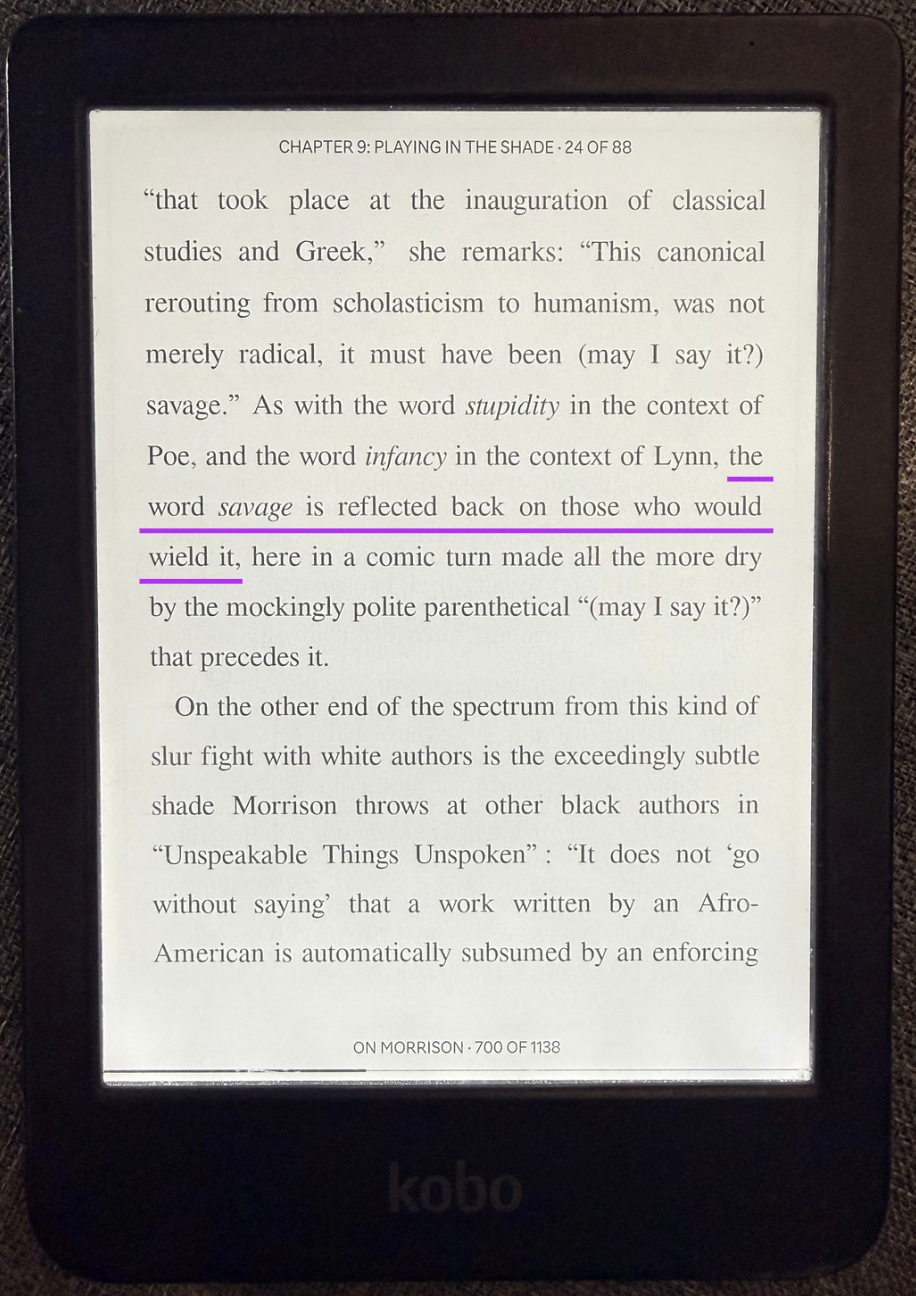
As with the word “stupidity” in the context of Poe, and the word “infancy” in the context of Lynn, the word “savage” is reflected back on those who would wield it…
正如在談及 Poe 時的 stupidity 一詞,以及在談及 Lynn 時的 infancy 一詞一樣,savage 一詞也被反過來指向那些會運用這個詞的人……
(From “On Morrison” by Namwali Serpell)
We obviously don’t need to go deep into the actual point that the author is making here, but the basic gist of the sentence is that the writer Toni Morrison reflected the word “savage” (野蠻 / 沒文化的) back at the privileged people who historically “wielded” the same word with their cultural power to degrade and marginalize the oppressed and powerless in American society.
So, the direct object that is “wielded” here is the word “savage.” This is another clear example of something figurative that we can “wield” -- apart from “weapons,” we can also “wield” words to intimidate and degrade others.
Beyond this concrete thing we can learn here, the fact that I saw an example of “wield” “in the wild” right after I wrote the last email goes to show that, if you just open your eyes and ears to the English around you and keep analyzing examples with your grammatical framework, you can learn new knowledge and compound that new knowledge at astonishingly speed.
All this English knowledge is out there in the world waiting -- you just need a way to absorb it!!
我上一封電郵談到的是雜誌裏的這一句:
One species, the common blanket octopus, wields venomous tentacles ripped from the Portuguese man o’ war as weapons.
其中一個物種(普通毯子章魚)會揮舞從僧帽水母身上扯下來的有毒觸手作為武器。
(Sara Hashemi, Smithsonian Magazine, 19 August 2026. Article: “Why Are Some Octopuses So Smart?”)
我們談到,有了文法框架後,可以怎樣從真實例子中,有系統地學習英文。
我上次提到,從任何一個例句中(當然,前提是句子本身正確和自然!),最容易學到的就是句子裏的字,包括它們的意思和文法特徵,因為我們要作有系統分析所需要的一切——所有「素材」——都已經在句子裏,不需要另外查找其他資料。
我們上次學到,動詞 wield 意思是「揮舞」,而 wield 表達這意思時,後面文法上需要有一個直接賓語,表達「揮舞」的是甚麼。我們也看到,wield 的通常是「武器」,或者一些具有權力或威嚇性的東西;不過,這不一定是具體的武器或實體物件。我們也可以 wield 一些比喻上的「武器」,例如 power(權力)、influence(影響力)、authority(權威) 等。
本來今天想繼續看看這個例句裏另一個值得學習的地方,不過今天早上吃早餐看書時,竟然又碰到了一個 wield 的真實例子,而且這一次 wield 的正是一種比喻上的、抽象的「武器」。所以在繼續下一個學習重點之前,先跟大家分享一下這個例子。
這是書裏的句子:
As with the word “stupidity” in the context of Poe, and the word “infancy” in the context of Lynn, the word “savage” is reflected back on those who would wield it…
正如在談及 Poe 時的 stupidity 一詞,以及在談及 Lynn 時的 infancy 一詞一樣,savage 一詞也被反過來指向那些會運用這個詞的人……
(From “On Morrison” by Namwali Serpell)
我們當然不需要深究作者在這裏在說甚麼論點,不過這句話的大概意思是:
作家 Toni Morrison 把 savage(野蠻/沒文化的) 這個字反過來用在有權力的人身上;歷史上,這些人正是憑藉自己的文化權力,運用 savage 這個字去貶低和邊緣化美國社會中受壓迫、沒有權力的人。
所以,這裏 wield 的直接賓語就是 the word “savage”。這又是一個很清楚的例子,讓我們看到 wield 的不一定是實體的東西:除了可以 wield weapons,我們也可以 wield words,用言語去威嚇和貶低別人。
而除了 wield 這個很具體的學習重點之外,還有一件事我覺得很值得留意:我才剛寫完上一封電郵,馬上就在真實世界的英文裏再次碰到 wield!
其實,只要你有意識地留意身邊的英文,再用自己的文法框架不斷分析碰到的例子,就會發現可以學的東西真的到處都是。你每學到一點新的知識,又可以用這一點知識去理解下一個例子,再從下一個例子學到更多,累積知識的速度可以快得很驚人。
這個世界到處都有英文知識在等著你——你只需要有一套方法把它們吸收進去!!